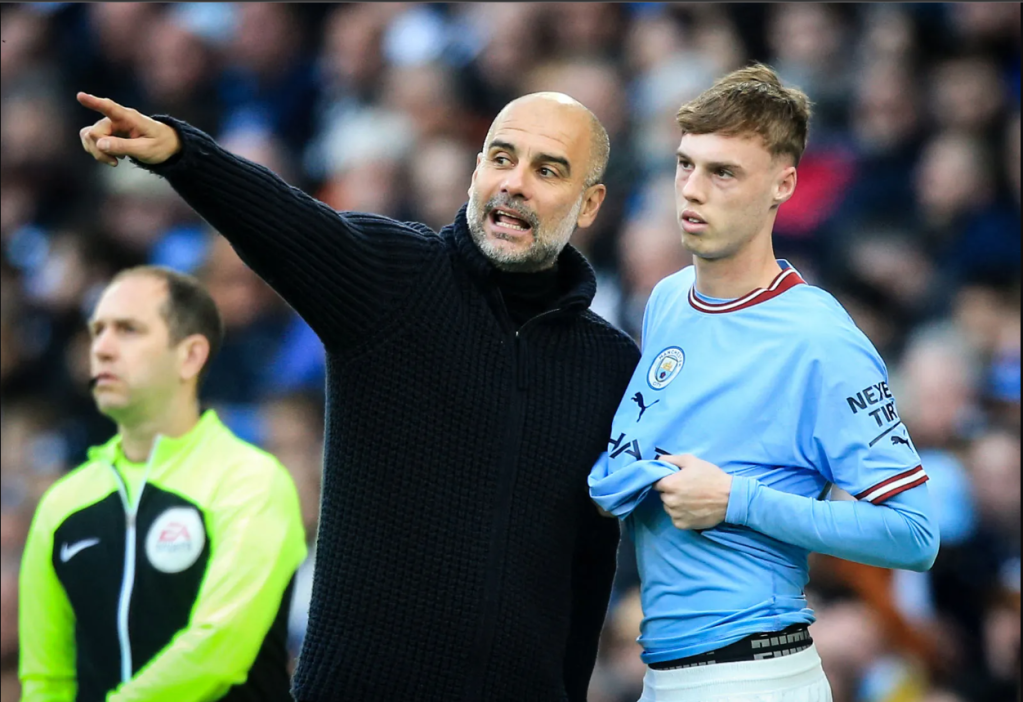
Every so often, the world of football is blessed with a manager whose strategies not only dominate the game but also shift its paradigm. One such luminary is Josep “Pep” Guardiola, a maestro of the sport whose tactical prowess and football acumen have firmly established him as one of the finest managers in football history. This article aims to deconstruct the tactics deployed by Pep Guardiola, detailing the philosophy, implementation, and impacts of his masterful strategies.
Football Philosophy: Continuing Johan Cruyff’s Legacy
Guardiola’s approach to football is rooted deeply in the philosophy of his mentor, Johan Cruyff. Through his stint at Barcelona’s famous La Masia academy and later under Cruyff’s management at Barcelona, Guardiola imbibed the Dutch master’s possession-based, attacking style, commonly known as ‘tiki-taka’. However, Pep’s interpretation of this style evolved over time, resulting in a more advanced and dynamic style of play.
The Fluid Formation
Guardiola’s teams typically display an adaptability that belies the notion of fixed formations. Though he nominally deploys his team in a 4-3-3 formation, this shape morphs as the game unfolds, often resembling a 3-4-3 or 2-3-5. This fluid formation allows his teams to dominate possession, as players move freely within their zones, creating numerical superiority and space.
The Power of Positional Play
Guardiola’s tactical bedrock is positional play, where his teams split the field into multiple zones. Each player occupies a specific zone, ensuring space distribution and options for the player with the ball. This framework enables his teams to maintain possession, manipulate opposition defenses, and create goal-scoring opportunities. The crux of this strategy lies in the players understanding the philosophy and adapting to different scenarios, making positional awareness crucial.
High Press and Building from the Back
Guardiola’s teams are renowned for their high-pressing defensive strategy, which aims to regain possession quickly after losing it. High press relies on intense work rate and coordination, leading to forcing the opposition into mistakes.
Similarly, Guardiola advocates for ‘building from the back.’ Rather than long balls from the goalkeeper, the ball is played short to defenders or holding midfielders. This approach ensures control and establishes the tempo of the game right from the start.
The False 9 Role
Guardiola has also breathed new life into the ‘false 9’ role, where a player, usually the central forward, drops deep into midfield. This move disrupts traditional defensive structures and creates overloads, confusion, and ultimately, space for other attacking players. Lionel Messi’s role at Barcelona under Guardiola is the epitome of the ‘false 9’ application.
The Impact of Pep’s Tactics
Guardiola’s tactics have profoundly impacted football. His approach has not only led to immense success at Barcelona, Bayern Munich, and Manchester City, but it has also inspired a generation of coaches. The emphasis on possession, fluid formations, and intelligent positional play has been widely adopted and adapted worldwide.
Moreover, his tactics have challenged traditional football notions, highlighting the sport’s cerebral aspect and promoting a more technically skilled, attractive, and entertaining version of the game.
Conclusion
Pep Guardiola’s tactics are a testament to his genius, illustrating a commitment to possession, space manipulation, and proactive football. His teams’ success across different leagues is evidence of the efficacy of his strategies. Yet, their real impact transcends trophies and titles. In championing the art of ‘thinking football,’ Guardiola has sculpted an enduring legacy that will continue to shape the game for generations to come. His tactical canvas is one of perpetual evolution, an exploration of the limitless possibilities within the beautiful game. As fans, analysts, or budding footballers, we can only watch, learn, and marvel at the spectacle.
 SocialFootball